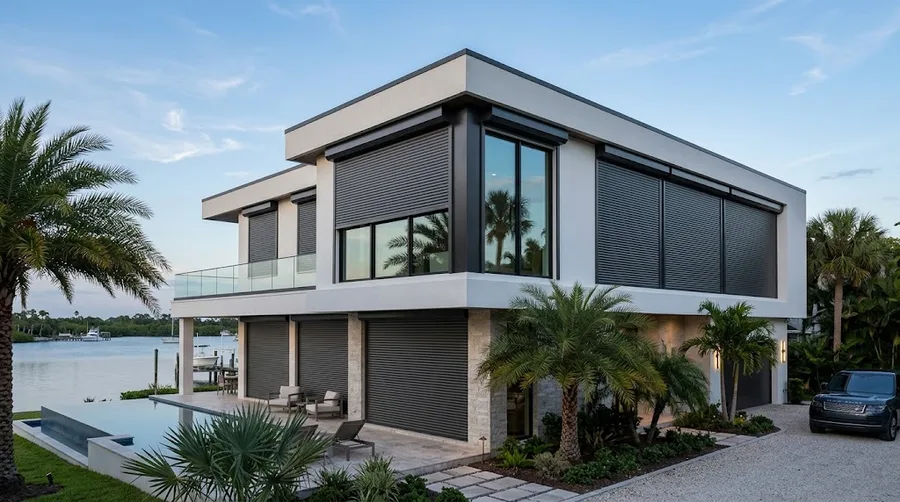
Closes in
Typical installed cost
Operation
Everyday bonus
Best for:
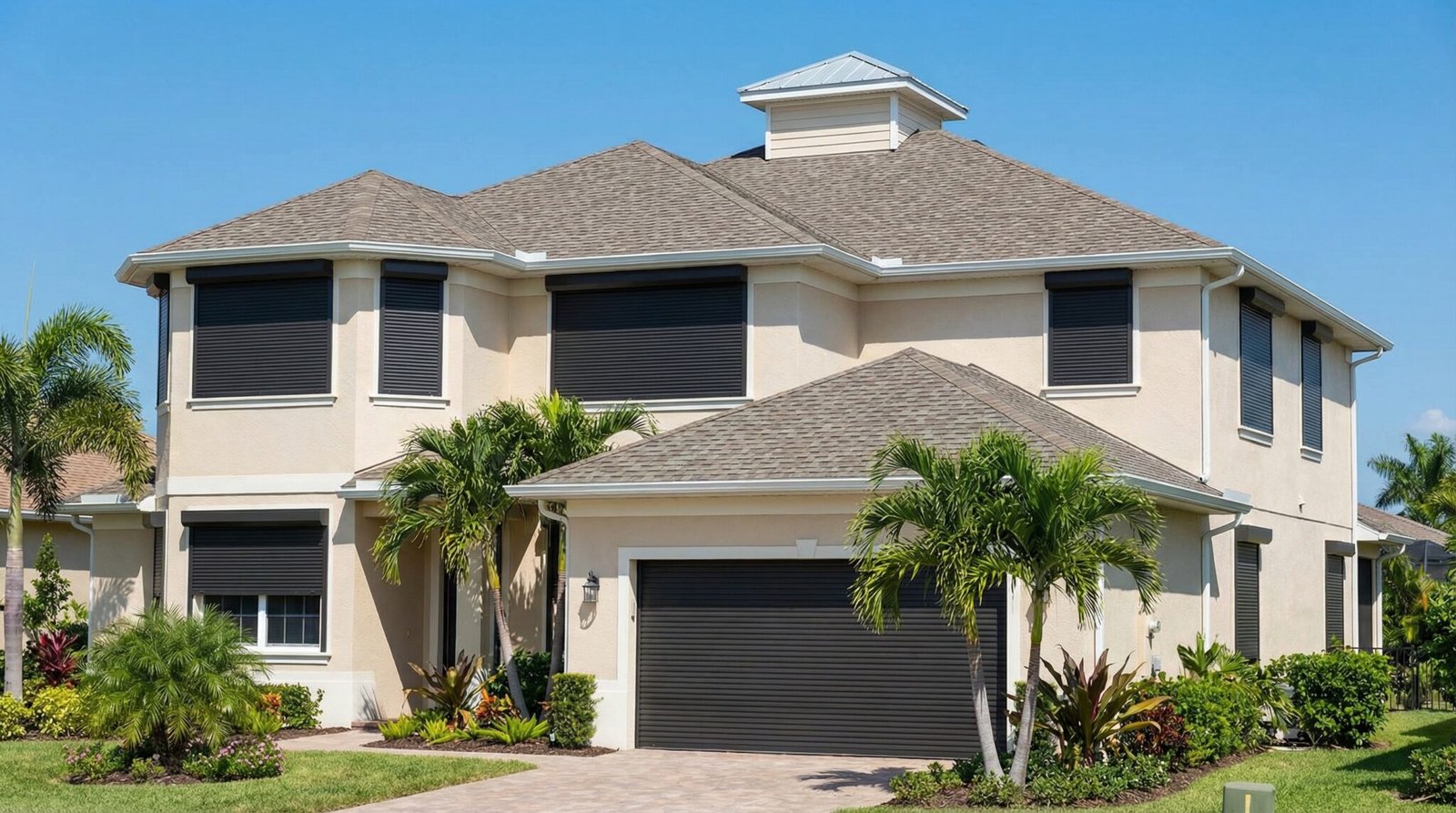
Roll-down, accordion, Bahama, colonial, and storm panel shutters for homes in Palmetto and across Manatee County — measured, permitted, and installed to the Florida Building Code.
Shutter Types
Every home is a mix — big sliders, small bathroom windows, a lanai you live on all year. Pick a type to see how it works, how fast it closes, and what it typically costs per opening.
Best for:
Count your windows and glass doors, pick a shutter style, and get a realistic installed range for a typical Manatee County home. Your written quote after measuring is the number that counts — this just helps you plan.
Why Shutters Pay
Florida law requires insurers to offer discounts for wind-resistant features, and opening protection — shutters or impact glass on every glazed opening — is one of the items a wind mitigation inspection checks. Exact credits vary by insurer and policy.
Wind that gets in through a single failed window or door can pressurize a home from the inside. Insurers give the opening-protection credit when every glazed opening is covered — which is why the measuring visit maps the whole house, not just the front.
A completed install comes with product approvals, permit sign-off, and photos of every protected opening — the same evidence a wind mitigation inspector (Form OIR-B1-1802) needs to record the credit on your policy.
Closed shutters darken bedrooms, cut heat gain on west-facing glass, add a real layer of security when you travel, and quiet the house during summer downpours — benefits you use long before a storm is named.
How It Works
Most homes follow the same four steps. Nothing is ordered until you have a written, itemized quote in hand.
Every opening is measured at your home, shutter options are matched to each one, and you get a written quote with per-opening pricing — free, with no obligation.
Shutters are a permitted improvement in Manatee County and the City of Palmetto. The permit application, product approvals, and ordering are handled for you.
Most single-family installs finish in one to two days. Tracks, housings, and hardware are anchored to structure — not just stucco — per the product approval.
You practice opening and closing every shutter, get care instructions, and receive the permit sign-off and photo set for your insurance file.
Before The Season
Hurricane season runs June 1 through November 30. A few quiet-weather habits keep any shutter system ready — future you, watching a storm track on TV, will be glad spring-you spent an hour on this:
Questions
Straight answers, in plain English — the way a good neighbor would explain it over the fence.
Yes — in Manatee County and the City of Palmetto, permanently installed shutter systems require a building permit, and the products themselves must carry Florida Building Code approval (many carry Miami-Dade Notices of Acceptance as well). The permit and final inspection are part of a proper install, and the signed-off paperwork matters for insurance.
Both are code-recognized opening protection. Impact windows are always "on" and upgrade the look and efficiency of the glass, but cost considerably more per opening. Shutters protect the existing windows at a lower cost, and roll-downs and accordions close fast — but only work if someone closes them. Many homes mix both: impact glass on hard-to-reach openings, shutters everywhere else.
It depends on your insurer, your roof, and the rest of the wind mitigation inspection — opening protection is one of several features that earn credits. Some homeowners see modest savings; others see a substantial cut in the wind portion of the premium. The honest answer comes from a wind mitigation inspection after install, and the photo documentation from your job is what the inspector works from.
Measuring and quoting happen in one visit. Once products arrive, most single-family homes are installed in one to two days, with the county or city inspection scheduled right after. Ordering early in spring avoids the pre-season rush, when lead times stretch across the whole industry.
Yes — wide sliders and lanai openings are exactly where roll-down and accordion systems shine, since both span large openings without a center post. Storm panels can cover them too, but the panel sizes get heavy; that's a measuring-visit conversation.
Very little: a spring dry run, rinsed tracks, silicone spray on moving parts, and a monthly run for motorized units. Aluminum systems don't rust, but coastal salt air rewards the five minutes of care.
Free Estimate
Fill this in and it opens a ready-to-send email with your details — or just call or text. The measuring visit and written quote are free.